
About the site
About AccessoryFit
AccessoryFit is a reference site about power tool accessories: which saw blade, drill bit, grinder disc, sanding pad or router bit fits which tool, and which type or size suits the job. It is built from manufacturer specifications, manuals and published standards, with the source for each figure listed on the page. It does not test products, and it says so wherever it compares them.
On this page
What does AccessoryFit do?
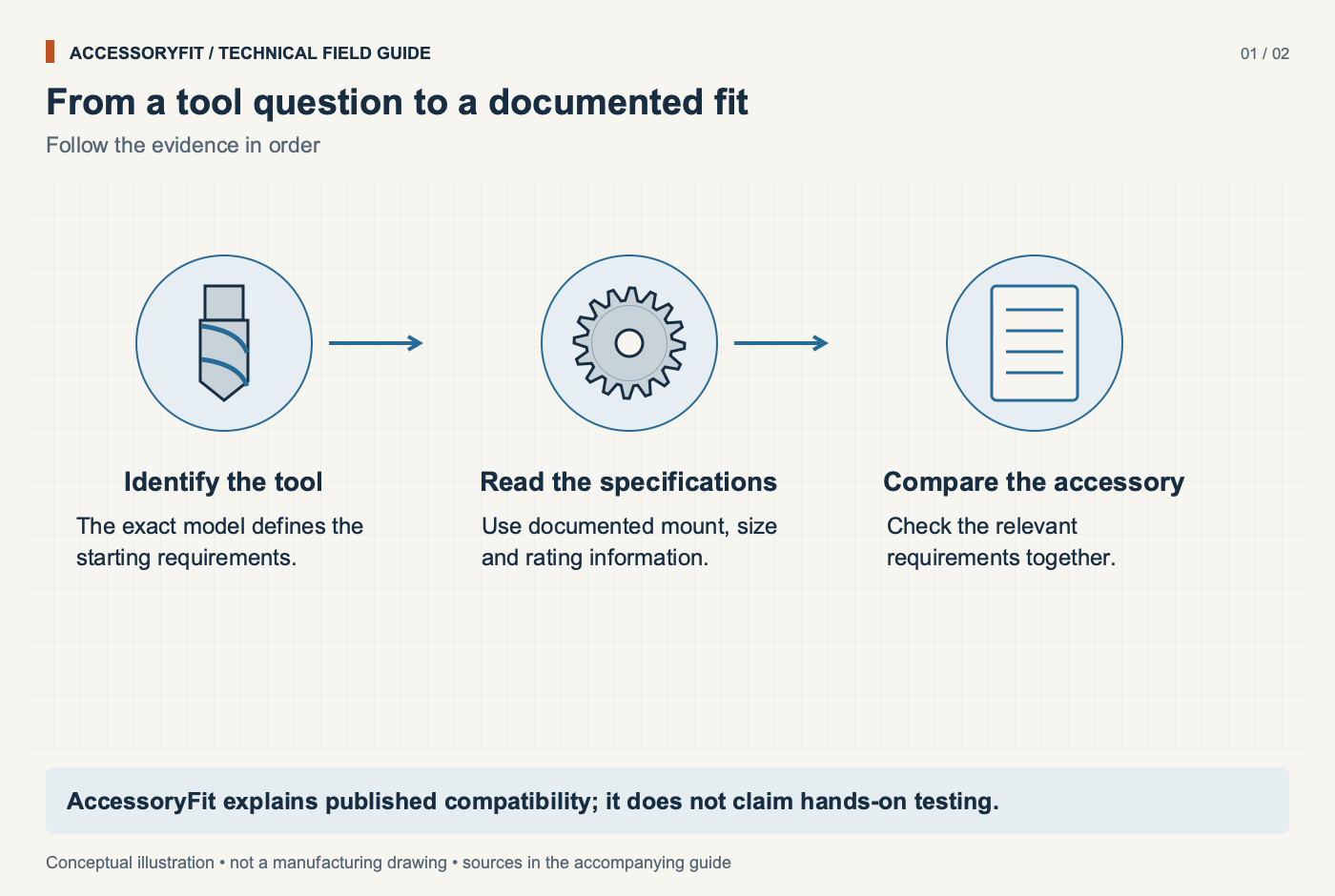
It answers fit and selection questions about accessories for power tools. Most buying mistakes with accessories come from a mismatch at one interface: a blade bore that does not match the saw's arbor, a bit shank the chuck or holder will not take, a grinder disc on the wrong thread or with too low a speed rating, a sanding disc whose holes do not line up with the pad. The site explains each interface, gives the sizes in inch and metric units, and sets out the rules makers publish for using accessories safely.
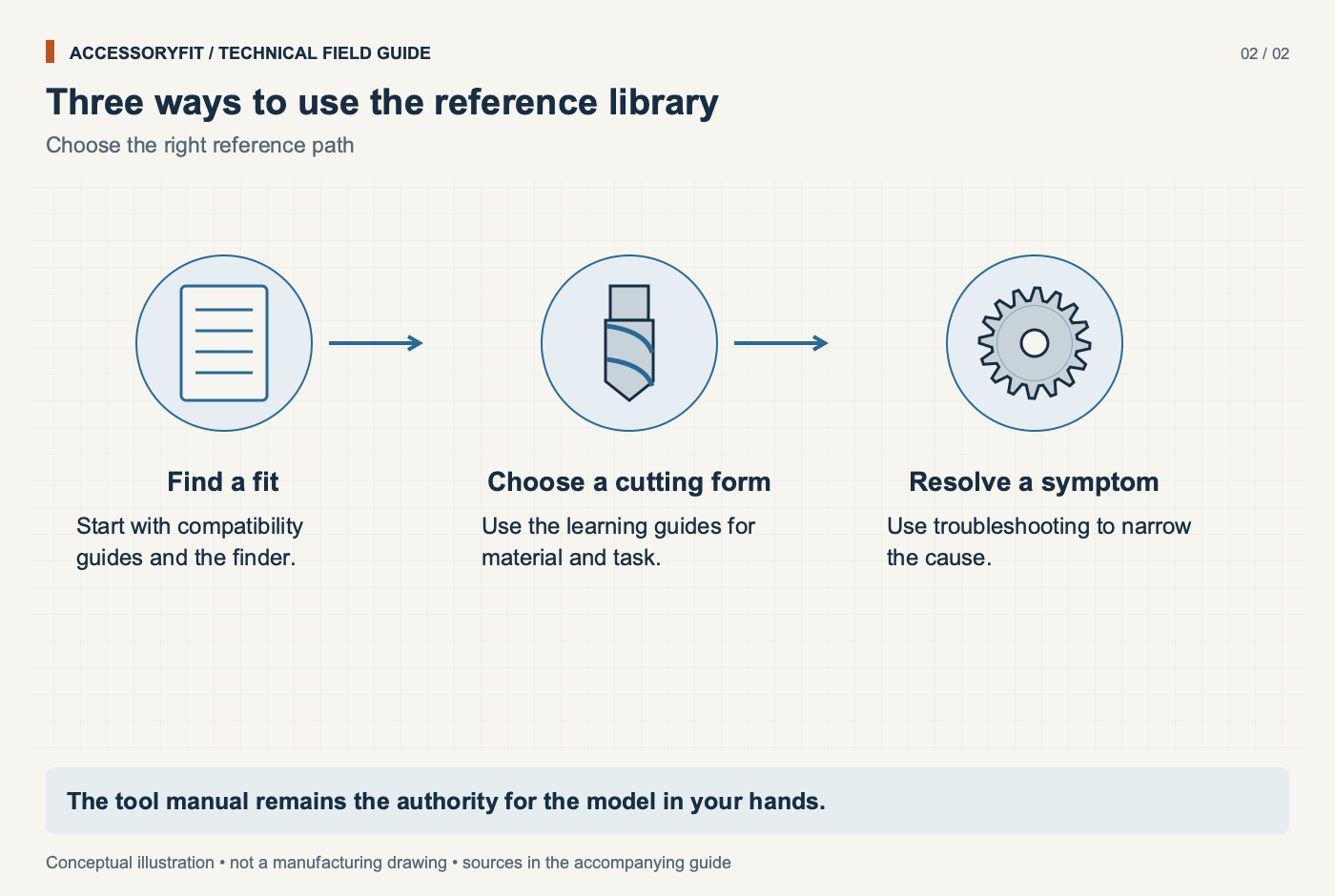
The site is organised around those questions. The compatibility guides cover what fits which tool. The how-to guides explain how to choose by tooth count, TPI, grit, profile and wheel type. The reference charts convert drill, tap drill, pilot hole, grit and hole saw sizes. The troubleshooting guides work through common faults by cause. The buyer guides compare current products against the needs of one job, using published specs. The accessory finder shows the mounting specs that makers publish for a range of named tool models. The illustrations from those guides are collected as free accessory diagrams that anyone may reuse with credit.
Who is the site written for?
Mainly for people buying and fitting accessories for their own tools: weekend DIYers first, then tradespeople who want a quick check of a size or rule, then new tool owners working out what their tool takes. Readers are in the United States and Europe, so pages give both inch and metric sizes, both US and European naming where they differ, and both the US CAMI and European FEPA grit scales.
Where does the information come from?
From documents published by others: tool and accessory makers' spec pages and manuals, standards and regulator guidance such as OSHA rules for abrasive wheels and saw guards, and established engineering and trade references. Each page lists its sources under References, with the date they were accessed. Values come from one shared fact base, so a size quoted in one guide matches the same size elsewhere on the site.
Where sources disagree, pages say so and give both figures. Where only one source supports a value, the page names that source. The methodology page explains these rules in full.
What does AccessoryFit not do?
It does not test, use or measure the products it discusses, and no page claims otherwise. It does not give star ratings, scores, rankings, best-overall labels or prices. It does not accept payment from tool or accessory makers to feature products, and it is not affiliated with any of the brands it covers. Safety notes on the site summarise manufacturer and regulator guidance; they do not replace the manual for your tool, which is the final word on fit and safe use.
How is the site funded?
Through the Amazon Associates programme. As an Amazon Associate I earn from qualifying purchases. When a reader follows a product link in a buyer guide to Amazon and buys something, Amazon pays the site a commission at no extra cost to the reader. The site runs no advertising and sells nothing directly. The affiliate disclosure explains how product links are marked and why they do not decide which products are listed.
Who makes the pages?
The AccessoryFit editors, publishing as an editorial team rather than under individual bylines. The team researches and records the facts; page drafts are written with AI writing assistance from those facts, as the methodology page explains. The team's role, and what it does and does not do, is described on the editorial team page. Corrections and questions are welcome through the contact page.
Where to go next
- MethodologyHow facts and products are sourced and checked.
- Editorial teamWho researches the facts and how pages are made.
- Compatibility guidesStart with what fits your tool.